2025年7月22日星期二

2025年5月12日星期一
2025年5月8日星期四
2025年4月30日星期三
2025年4月7日星期一
2025年3月1日星期六
2024年12月16日星期一
2024年10月20日星期日
2024年7月3日星期三
2024年3月25日星期一
2022年12月28日星期三
4000 ISLANDS, DON KHON & DON DET 🇱🇦 I LAOS
We visited Don Khon and Don Get situated in the south of Laos! This group of islands called 4000 island (because there is 4000 of them) are in the middle of the Mekong river. To get from here from Pakse is only a short 2 hour ride and a small boat ride to the island. These islands are so relaxed and really are a backpackers utopia!
Come with us as we explore both islands on the bicycle. Did we make a mistake visiting in the wet season though ? The answer is YES! We wished we visited in the dry season as you would be able to access the beach and also see the amazing waterfalls better.
We hope you enjoy the video :)
2020年3月12日星期四
The 4000 Islands by Kayak
The 4000 Islands by Kayak

The 4000 Islands in southern Laos, low lying sandy clumps in the Mekong River, are famous for their easy-going pace, banana pancakes, afternoons in hammocks, dolphin-spotting opportunities, wide-sky sunsets, and raucous parties.
I’ve cycled over traces of the old French railway tracks through mango and teak forests, walked the slow loop of sandy trails wriggling through the islands’ small communities, and flitted about from one vestige of French power to another, to bar, to café, and guesthouse many times. I’d never considered taking to the water, though, until now.
The Mekong River can look formidable at times – a fast-flowing wide milk chocolate brown river cut with rocky islands and drowned trees. But a kayaking trip sounded exciting, and with a chance to spot the area’s rare Irrawaddy dolphins, too, I eagerly signed up.
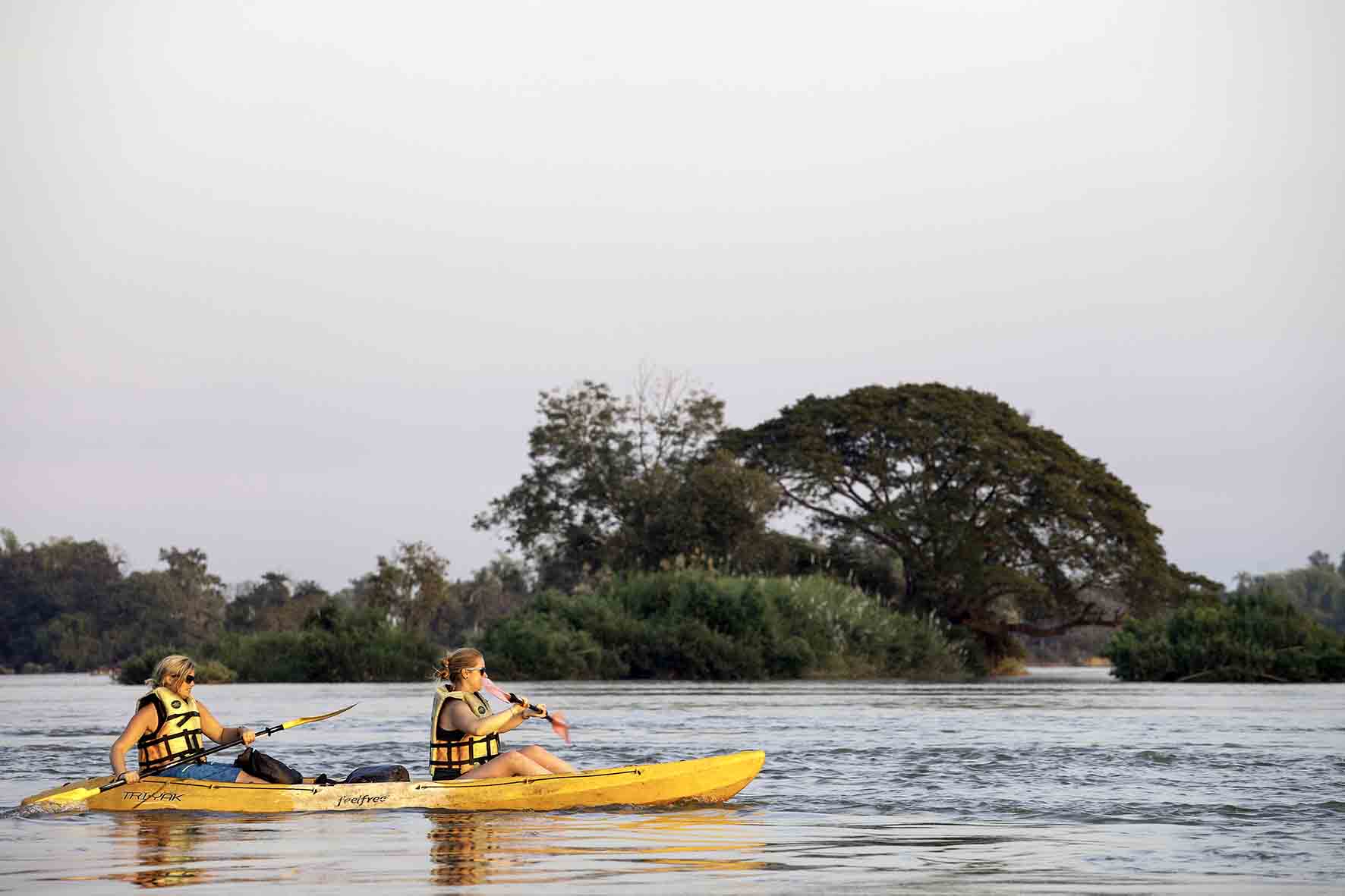
Green Paradise’s kayaking expedition wisely includes free breakfast for its mainly land-lubber clientele. After fuelling up with baguette, egg, and thick Lao coffee at a restaurant on Don Det island, we grabbed life jackets and tucked into our kayaks. Hoping to halve the work of paddling, I jumped into a kayak with our guide, Mr. Sam.
V Patient Mr. Sam spent a good deal of time barking ‘right, right’ as our crew of 21 – Brits, Australians, Dutch, French, and Hungarians – took to the water like ducks, I mean clumsy humans, grappling with kayak balance, water flow, and huge thickets of vegetation that reared up unexpectedly.
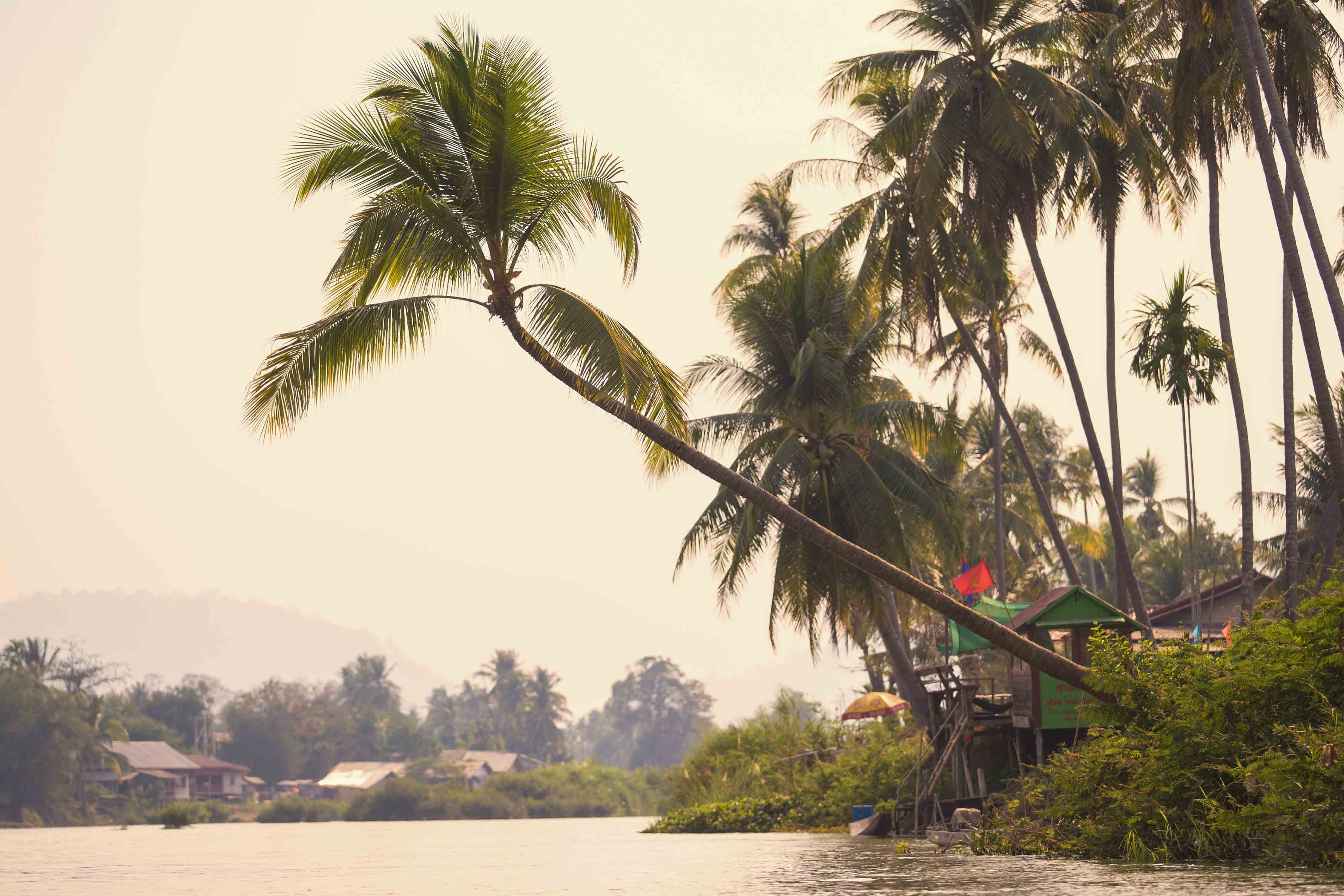
Our first destination was downstream at Don Khone Island’s Pa Soi rapids. Early on we temporarily lost part of the group, one kayak team fell into the river, and one kayak got sucked into a cluster of bushes and became entangled. The heat was unforgiving but we giggled at these mishaps and continued on our journey navigating clumps of trees and mini islands. We parked up just before Pa Soi rapids and walked over a bridge to look at the frothing water below.
The kayaks had been moved beyond Pa Soi Falls to a safe spot; we boarded them again for a journey to the bottom of Khone Island. At Hang Khone village, at the tip of Khone Island, we packed into a longtail boat to head upstream in search of the critically endangered Irrawaddy dolphin. We clambered up the sandy hill of a large island and looked across the stream of the fast-flowing river. The dolphins, their wet skin glistening in the sun, surfaced and ducked as they searched for fish in the food-rich pools. It was thrilling to catch a glimpse of these rare mammals. The WWF reports there’s been a slight increase in their numbers in the Mekong in Cambodia from 80 in 2015 to 92 in 2017 but not in Laos. In the Lao Mekong, there are just three. While munching on a lunch of baguette, chicken, and fried rice we saw all three of them about 30 to 40 times – all fins, snouts, sleek metal-grey bodies gleaming in the strong sun.
Back at Khone Island we fetched our kayaks and headed out downriver to a pickup point on the mainland at Ban Veunkham. The sun was crippling but, like a miracle, there on the riverbank at Ban Veunkham was a stall with a packed icebox. We cleaned it out of Beerlao and Coke before boarding a truck to visit the mother of all waterfalls – the kilometers-wide Khone Phapheng Falls.
At first sight, you can see why it defeated French colonial explorers. It’s a seething, frothing mass of thundering water swirling over sturdy boulders as it fights to enter Cambodia and the lower Mekong. The French found themselves in these parts when they were shoring up claims to the river and their Indochina colonies. The French needed to move gunboats into position to defend new territorial claims but navigating past the raging Khone Phapheng Falls – with its 21-meter drop – had defeated French minds. They built a railway across Khone Island, directly west of the Phapheng Falls, so two gunboats could be hauled across it; the railway infrastructure (some of which we saw at Hang Khone village) was later adapted for commercial traffic with steamboats on the river thrown into the mix. When roads were built in the 1930s the railway fell into disuse. Today, rusty locomotives stand abandoned at the edge of paddy fields, the last tangible remnants of island railway traffic.
After ice cream – more energy – we boarded our kayaks at Nakasang village to paddle downstream and back to Don Det Island. As the rose-pink sun began to set, the light was beautiful, the water appeared like silk, clumps of greenery took on a velvet glow, and fishermen were pootling about in pirogues.
Of course, after so much exercise, we replenished our muscles with more sundowner Beerlao as soon as we clambered back on to dry land!
GETTING THERE
Lao Airlines has daily flights to Pakse from Vientiane, Luang Prabang, and Bangkok. The 4000 Islands are 3 hours south of Pakse by road.
~The Laotian Times~
The 4000 Islands in southern Laos, low lying sandy clumps in the Mekong River, are famous for their easy-going pace, banana pancakes, afternoons in hammocks, dolphin-spotting opportunities, wide-sky sunsets, and raucous parties.
I’ve cycled over traces of the old French railway tracks through mango and teak forests, walked the slow loop of sandy trails wriggling through the islands’ small communities, and flitted about from one vestige of French power to another, to bar, to café, and guesthouse many times. I’d never considered taking to the water, though, until now.
The Mekong River can look formidable at times – a fast-flowing wide milk chocolate brown river cut with rocky islands and drowned trees. But a kayaking trip sounded exciting, and with a chance to spot the area’s rare Irrawaddy dolphins, too, I eagerly signed up.
Green Paradise’s kayaking expedition wisely includes free breakfast for its mainly land-lubber clientele. After fuelling up with baguette, egg, and thick Lao coffee at a restaurant on Don Det island, we grabbed life jackets and tucked into our kayaks. Hoping to halve the work of paddling, I jumped into a kayak with our guide, Mr. Sam.
V Patient Mr. Sam spent a good deal of time barking ‘right, right’ as our crew of 21 – Brits, Australians, Dutch, French, and Hungarians – took to the water like ducks, I mean clumsy humans, grappling with kayak balance, water flow, and huge thickets of vegetation that reared up unexpectedly.
Our first destination was downstream at Don Khone Island’s Pa Soi rapids. Early on we temporarily lost part of the group, one kayak team fell into the river, and one kayak got sucked into a cluster of bushes and became entangled. The heat was unforgiving but we giggled at these mishaps and continued on our journey navigating clumps of trees and mini islands. We parked up just before Pa Soi rapids and walked over a bridge to look at the frothing water below.
The kayaks had been moved beyond Pa Soi Falls to a safe spot; we boarded them again for a journey to the bottom of Khone Island. At Hang Khone village, at the tip of Khone Island, we packed into a longtail boat to head upstream in search of the critically endangered Irrawaddy dolphin. We clambered up the sandy hill of a large island and looked across the stream of the fast-flowing river. The dolphins, their wet skin glistening in the sun, surfaced and ducked as they searched for fish in the food-rich pools. It was thrilling to catch a glimpse of these rare mammals. The WWF reports there’s been a slight increase in their numbers in the Mekong in Cambodia from 80 in 2015 to 92 in 2017 but not in Laos. In the Lao Mekong, there are just three. While munching on a lunch of baguette, chicken, and fried rice we saw all three of them about 30 to 40 times – all fins, snouts, sleek metal-grey bodies gleaming in the strong sun.
Back at Khone Island we fetched our kayaks and headed out downriver to a pickup point on the mainland at Ban Veunkham. The sun was crippling but, like a miracle, there on the riverbank at Ban Veunkham was a stall with a packed icebox. We cleaned it out of Beerlao and Coke before boarding a truck to visit the mother of all waterfalls – the kilometers-wide Khone Phapheng Falls.
At first sight, you can see why it defeated French colonial explorers. It’s a seething, frothing mass of thundering water swirling over sturdy boulders as it fights to enter Cambodia and the lower Mekong. The French found themselves in these parts when they were shoring up claims to the river and their Indochina colonies. The French needed to move gunboats into position to defend new territorial claims but navigating past the raging Khone Phapheng Falls – with its 21-meter drop – had defeated French minds. They built a railway across Khone Island, directly west of the Phapheng Falls, so two gunboats could be hauled across it; the railway infrastructure (some of which we saw at Hang Khone village) was later adapted for commercial traffic with steamboats on the river thrown into the mix. When roads were built in the 1930s the railway fell into disuse. Today, rusty locomotives stand abandoned at the edge of paddy fields, the last tangible remnants of island railway traffic.
After ice cream – more energy – we boarded our kayaks at Nakasang village to paddle downstream and back to Don Det Island. As the rose-pink sun began to set, the light was beautiful, the water appeared like silk, clumps of greenery took on a velvet glow, and fishermen were pootling about in pirogues.
Of course, after so much exercise, we replenished our muscles with more sundowner Beerlao as soon as we clambered back on to dry land!
GETTING THERE
Lao Airlines has daily flights to Pakse from Vientiane, Luang Prabang, and Bangkok. The 4000 Islands are 3 hours south of Pakse by road.
~The Laotian Times~
2019年11月21日星期四
World Heritage Certificate for Plain of Jars
Laos Receives World Heritage Certificate for Plain of Jars
The UNESCO World Heritage Committee presented Laos with a certificate recognizing the World Heritage List designation of the Plain of Jars on Monday.
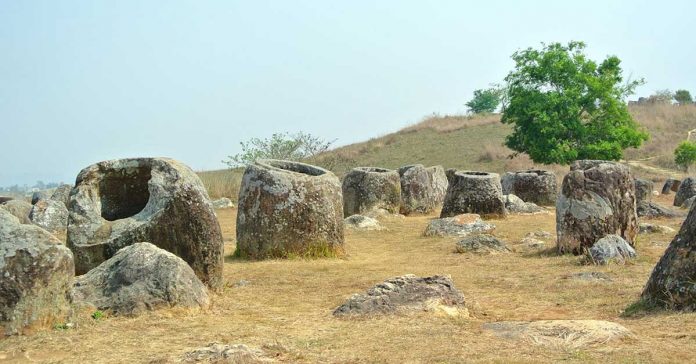
The Plain of Jars, situated on a plateau in Xieng Khuang Province, is named for the more than 2,100 tubular megalithic stone jars that are thought to have been used in the Iron Age for funeral practices.
Prof. Dr. Bosengkham Vongdara, with a special envoy of the Lao government, was presented with the award at the Forum of Ministers of Culture during the 40th session of the UNESCO General Conference held at the headquarters of UNESCO in Paris, France.
“We highly appreciate the role of UNESCO in fostering cultural diversity so that we can conserve and develop our own diverse and unique national culture and learn closely and constructively from each other,” said Prof. Dr. Bonsengkham Vondara when speaking at the certificate ceremony.
“In addition, our government is making a great effort to our heritage through tourism. By maintaining and opening up our cultural and historical sites, our aim is to grow and encourage cultural tourism, natural eco-tourism, and historical tourism.”

The Plain of Jars, formally called the Megalithic Jar Sites, was officially inscribed on the World Heritage List at a World Heritage Committee meeting held in Baku, Azerbaijan on July 10 this year, after submission in 2018.

Prof. Dr. Bosengkham Vongdara receives the Plain of Jars World Heritage Certificate in Paris, France.
The Plain of Jars is the third World Heritage Site in Laos. Luang Prabang, the former capital of Laos’s Lanexang Kingdom, was declared a World Heritage City in 1995, followed in 2001 by the site of Vat Phou in Champasack.
Xieng Khuang is situated 435 km north of Vientiane and is accessible by road or by air.
~Laotian Times~
The UNESCO World Heritage Committee presented Laos with a certificate recognizing the World Heritage List designation of the Plain of Jars on Monday.
The Plain of Jars, situated on a plateau in Xieng Khuang Province, is named for the more than 2,100 tubular megalithic stone jars that are thought to have been used in the Iron Age for funeral practices.
Prof. Dr. Bosengkham Vongdara, with a special envoy of the Lao government, was presented with the award at the Forum of Ministers of Culture during the 40th session of the UNESCO General Conference held at the headquarters of UNESCO in Paris, France.
“We highly appreciate the role of UNESCO in fostering cultural diversity so that we can conserve and develop our own diverse and unique national culture and learn closely and constructively from each other,” said Prof. Dr. Bonsengkham Vondara when speaking at the certificate ceremony.
“In addition, our government is making a great effort to our heritage through tourism. By maintaining and opening up our cultural and historical sites, our aim is to grow and encourage cultural tourism, natural eco-tourism, and historical tourism.”
The Plain of Jars, formally called the Megalithic Jar Sites, was officially inscribed on the World Heritage List at a World Heritage Committee meeting held in Baku, Azerbaijan on July 10 this year, after submission in 2018.
Prof. Dr. Bosengkham Vongdara receives the Plain of Jars World Heritage Certificate in Paris, France.
The Plain of Jars is the third World Heritage Site in Laos. Luang Prabang, the former capital of Laos’s Lanexang Kingdom, was declared a World Heritage City in 1995, followed in 2001 by the site of Vat Phou in Champasack.
Xieng Khuang is situated 435 km north of Vientiane and is accessible by road or by air.
~Laotian Times~
2019年2月17日星期日
Tad Soung Waterfall - Salavanh Province
TAD SOUNG WATERFALL
SALAVANH PROVINCE

When many people think of a river’s direction, they assume it flows from north to south. However the Xe Set River originates in the Bolaven Plateau’s north and continues in the same direction to the highland’s edge before plummeting 90 meters off a totally vertical cliff at Tad Soung Waterfall.
Reaching the head of the falls is quite easy; a walk of less than 1 kilometer from Saneum Nai leads to a set of natural stairs descending to Tad Soung. French colonials built a series of ladders along a similar route, but a rockslide destroyed them decades ago.
Though much of the Xe Set’s volume is diverted into turbines to feed power to hydroelectric plants, Tad Soung remains quite spectacular, as does its dramatic yet relaxing perch. A pavilion used by locals sits near the Xe Set’s banks as the river eases down boulders into small pools before reaching a wide, flat rocky floor and Tad Soung’s precipitous edge.
~Courtesy of Laos Simply Beautiful(Facebook)~
SALAVANH PROVINCE

When many people think of a river’s direction, they assume it flows from north to south. However the Xe Set River originates in the Bolaven Plateau’s north and continues in the same direction to the highland’s edge before plummeting 90 meters off a totally vertical cliff at Tad Soung Waterfall.
Reaching the head of the falls is quite easy; a walk of less than 1 kilometer from Saneum Nai leads to a set of natural stairs descending to Tad Soung. French colonials built a series of ladders along a similar route, but a rockslide destroyed them decades ago.
Though much of the Xe Set’s volume is diverted into turbines to feed power to hydroelectric plants, Tad Soung remains quite spectacular, as does its dramatic yet relaxing perch. A pavilion used by locals sits near the Xe Set’s banks as the river eases down boulders into small pools before reaching a wide, flat rocky floor and Tad Soung’s precipitous edge.
~Courtesy of Laos Simply Beautiful(Facebook)~
2017年9月19日星期二
Top 5 things to do in Luang Prabang, Laos
Top 5 things to do in Luang Prabang, Laos
In between Vietnam and Thailand, Laos is lesser-known and lesser-discovered, but no less interesting than its pair of famous neighbours.
As a long thin country that also touches China to the north and Cambodia to the south, the landscape varies wildly; from thickly-forested areas to more tropical surrounds with plunging waterfalls and thousands of islands.

No trip to this country would be complete without a couple of days in former royal capital, Luang Prabang, so beautifully preserved that it became a UNESCO World Heritage Site in 1995.
Make sure you’re camera-ready as you take it all in; there’s a photo opportunity around every magical corner. Gilded temples with sloping roofs gleam in the sunshine, faded French colonial villas line the streets, and the rolling mountains and the Mekong and Nam Khan rivers lay just beyond the town.
Everything ticks over at a leisurely pace, substituting the frenetic energy of nearby countries for a laid-back calm.
Most visitors only spare two or three days here, so it’s important to have a plan. There are more than a few ways to make the best of it.
1. Take an architecture tour
With a combination of traditional Buddhist temples (bathed in gold leaf), traditional stilted houses, and French colonial architecture around every corner, a trip to Luang Prabang is an architecture tour in itself.
But team up with an expert to get the stories behind these fascinating streets, and track the evolution of the town; from its ancient conception, through the colonial and royal eras, and right up to the present day.

2. Take a cycling tour
Why not see the sights atop two wheels? A bike gives you the freedom (and time) to see the best of the town, venture into the countryside and feel the wind in your hair – often a welcome treat in the humid months.

Wheel from place to place; the Wat Visoun, National Museum (previously the Royal Palace), the Wat Mai Temple and Wat Xieng Thong are all worth a visit.
Then leave the town behind to see the landscape just outside. Hop down to potter around the Phosy Market and see great pails with mountains of rice, a rainbow of fresh fruit and vegetables on offer, and bottles of fresh fruit juice to fuel your onward journey.
Visit non-profit organisations, chat to local villagers and peer over the waters of the Mekong. Certainly more than you could manage on foot.
3. Celebrate Songkran
To see an especially authentic side to Luang Prabang, visit in April during Songkran (Pi Mai Lao), Lao New Year. Celebrations take place across the country, with a lot of water-based events.
It’s a special time when the community, along with swathes of orange-robed monks, come together. The most important Buddha statues are carried through the streets, and Buddha images, temples and houses are washed down.
As are people! Find yourself doused in an enthusiastic water fight, or even the recipient of a bucket of water over your head – a good-humoured way of saying Happy New Year.
4. Take a cookery class
Lao cuisine is an unknown entity to many outsiders. It’s actually quite similar to some dishes in northeastern Thailand, and incorporates lots of fresh produce.
Any cookery class in Luang Prabang is likely to begin with a trip to the market to personally pick out your ingredients, and learn about a few of the area’s more unusual herbs, fruits and vegetables.
Work with skilled local chefs, discover the authentic methods that go into this delicious cuisine, and take your new found cookery skills home with you.

5. Walk to the top of Mount Phousi at sunrise or sunset
For panoramic views of the town and the lush areas in the distance, pay an nominal fee and take a gentle climb up the steps to Mount Phousi.
Spot the meandering Nam Kham and Mekong rivers, as well as the undulating horizon. You can rest your feet at one of the interesting temples or outside a Buddha statue along the way, but at only 100km high, it’s not a strenuous ascent. Plan your trip at sunrise or sunset when the views are at their most beautiful.

~Courtesy of a luxury travel blog~
In between Vietnam and Thailand, Laos is lesser-known and lesser-discovered, but no less interesting than its pair of famous neighbours.
As a long thin country that also touches China to the north and Cambodia to the south, the landscape varies wildly; from thickly-forested areas to more tropical surrounds with plunging waterfalls and thousands of islands.

No trip to this country would be complete without a couple of days in former royal capital, Luang Prabang, so beautifully preserved that it became a UNESCO World Heritage Site in 1995.
Make sure you’re camera-ready as you take it all in; there’s a photo opportunity around every magical corner. Gilded temples with sloping roofs gleam in the sunshine, faded French colonial villas line the streets, and the rolling mountains and the Mekong and Nam Khan rivers lay just beyond the town.
Everything ticks over at a leisurely pace, substituting the frenetic energy of nearby countries for a laid-back calm.
Most visitors only spare two or three days here, so it’s important to have a plan. There are more than a few ways to make the best of it.
1. Take an architecture tour
With a combination of traditional Buddhist temples (bathed in gold leaf), traditional stilted houses, and French colonial architecture around every corner, a trip to Luang Prabang is an architecture tour in itself.
But team up with an expert to get the stories behind these fascinating streets, and track the evolution of the town; from its ancient conception, through the colonial and royal eras, and right up to the present day.

2. Take a cycling tour
Why not see the sights atop two wheels? A bike gives you the freedom (and time) to see the best of the town, venture into the countryside and feel the wind in your hair – often a welcome treat in the humid months.

Wheel from place to place; the Wat Visoun, National Museum (previously the Royal Palace), the Wat Mai Temple and Wat Xieng Thong are all worth a visit.
Then leave the town behind to see the landscape just outside. Hop down to potter around the Phosy Market and see great pails with mountains of rice, a rainbow of fresh fruit and vegetables on offer, and bottles of fresh fruit juice to fuel your onward journey.
Visit non-profit organisations, chat to local villagers and peer over the waters of the Mekong. Certainly more than you could manage on foot.
3. Celebrate Songkran
To see an especially authentic side to Luang Prabang, visit in April during Songkran (Pi Mai Lao), Lao New Year. Celebrations take place across the country, with a lot of water-based events.
It’s a special time when the community, along with swathes of orange-robed monks, come together. The most important Buddha statues are carried through the streets, and Buddha images, temples and houses are washed down.
As are people! Find yourself doused in an enthusiastic water fight, or even the recipient of a bucket of water over your head – a good-humoured way of saying Happy New Year.
4. Take a cookery class
Lao cuisine is an unknown entity to many outsiders. It’s actually quite similar to some dishes in northeastern Thailand, and incorporates lots of fresh produce.
Any cookery class in Luang Prabang is likely to begin with a trip to the market to personally pick out your ingredients, and learn about a few of the area’s more unusual herbs, fruits and vegetables.
Work with skilled local chefs, discover the authentic methods that go into this delicious cuisine, and take your new found cookery skills home with you.

5. Walk to the top of Mount Phousi at sunrise or sunset
For panoramic views of the town and the lush areas in the distance, pay an nominal fee and take a gentle climb up the steps to Mount Phousi.
Spot the meandering Nam Kham and Mekong rivers, as well as the undulating horizon. You can rest your feet at one of the interesting temples or outside a Buddha statue along the way, but at only 100km high, it’s not a strenuous ascent. Plan your trip at sunrise or sunset when the views are at their most beautiful.

~Courtesy of a luxury travel blog~
2017年3月23日星期四
Plain Of Jars: Unique Places Around The World
Plain Of Jars: Unique Places Around The World
Plain of Jars is a large archaeological landscape found in Laos.

The Plain of Jars site.
The Plain of Jars is perhaps one of the most prolific sites in Laos. From overall aesthetics to the essential details, the plain symbolizes an oasis of ancient artifacts amid threats of a diminishing history around the region. Apart from being an established sanctuary, the Plain of Jars contributes majorly towards the economy. Although this nature reserve stands out as a major positive contributor towards the livelihood, it most certainly faces significant threats which may require future consideration.
5. Description

The Plain of Jars is located far in the northern regions of Annamese Cordillera, which is one of the largest mountain range in Southeast Asia. The archaeological landscape consists of various stones shaped in the form of jars. These beautiful jars are carefully arranged in a cluster-like manner. The distribution of the jars spans both the valley as well as the foothills in the mid-plain of Laos. It was not until 1930 that Madeleine Colani, a famous French researcher established that the jars came as a result of ancient burial practices. Excavation projects since then have confirmed this.
4. Tourism
Like many prehistoric sites, the Plain of Jars attracts many tourists from around the globe every year. This translates to a significant economic value regarding foreign exchange and other aspects such as international relationships. The breathtaking landscape acts as a distinct region where tourists come to quench their thirst for new experiences. The government has equally invested in the region by ensuring a safe and a convenient passage to the tourist site. There is a bus and air travel to the regions surrounding the plains. Although tourism in the region is still being fostered due to the bombings which occurred between 1964 to 1973, there are profound measures which have been put to restore the pride of the Plain of Jars.
3. Uniqueness
Even though there is substantial evidence to ascertain the origin of the jars in the region, the jars continue to carry an air of mystery. There is no clear fact that shows the maker of the jars and their reason. The bizarre collection of scattered jars in the plain is one of the unique sites one’s eyes meet upon visiting the plain. The presence of five different types of stones within the wall structure of the jars is also a startling occurrence that further serves to explore the uniqueness of the jars.
2. Habitat
The jars are mostly located in a plain which mostly has grass and scattered trees growing around them. Although the most attractive features about the plain are the jars, wildlife is also an occasional occurrence as small animals can be seen on the plains.
1. Threats

Between the years of 1964 to 1973, the U.S. Air Force bombed the Plain of Jars heavily in an effort against the communist forces of Pathet Lao and North Vietnam. A staggering amount of these bombs never exploded, and remain an active deadly threat in the area. As such, sightseeing can only be done on paths which have been clearly indicated. A program titled "Safeguarding the Plain of Jars" is a joint effort between Laos and the United Nations, with the intention to make the Plain of Jars safe enough to be a UNESCO Heritage Site.
~News courtesy of World Atlas~
Plain of Jars is a large archaeological landscape found in Laos.
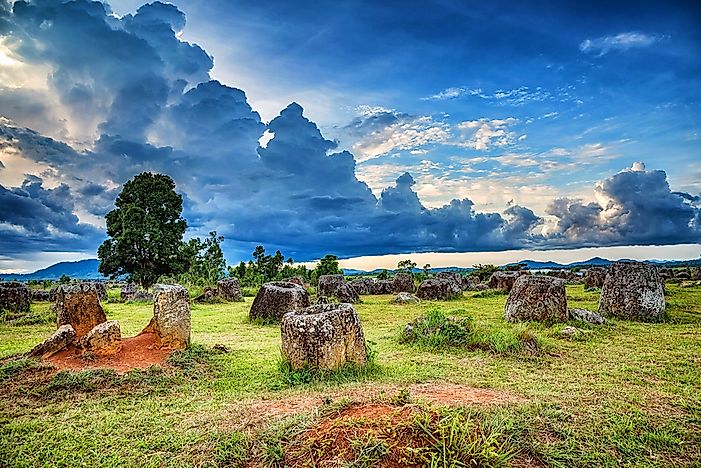
The Plain of Jars site.
The Plain of Jars is perhaps one of the most prolific sites in Laos. From overall aesthetics to the essential details, the plain symbolizes an oasis of ancient artifacts amid threats of a diminishing history around the region. Apart from being an established sanctuary, the Plain of Jars contributes majorly towards the economy. Although this nature reserve stands out as a major positive contributor towards the livelihood, it most certainly faces significant threats which may require future consideration.
5. Description
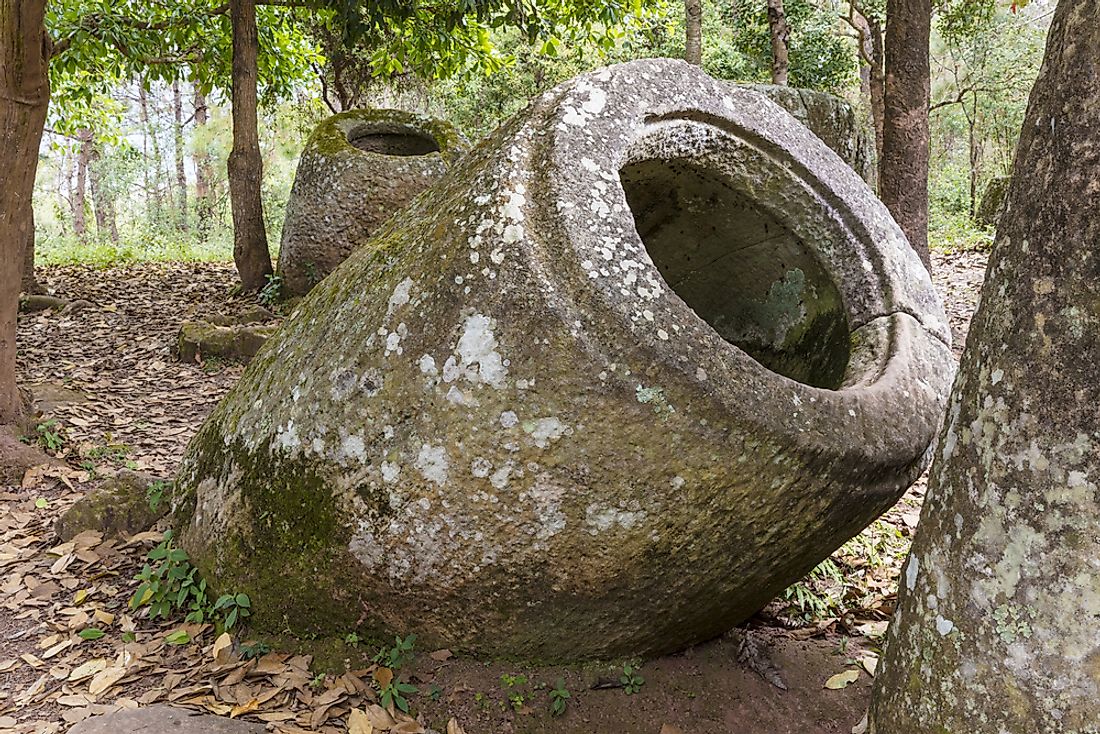
The Plain of Jars is located far in the northern regions of Annamese Cordillera, which is one of the largest mountain range in Southeast Asia. The archaeological landscape consists of various stones shaped in the form of jars. These beautiful jars are carefully arranged in a cluster-like manner. The distribution of the jars spans both the valley as well as the foothills in the mid-plain of Laos. It was not until 1930 that Madeleine Colani, a famous French researcher established that the jars came as a result of ancient burial practices. Excavation projects since then have confirmed this.
4. Tourism
Like many prehistoric sites, the Plain of Jars attracts many tourists from around the globe every year. This translates to a significant economic value regarding foreign exchange and other aspects such as international relationships. The breathtaking landscape acts as a distinct region where tourists come to quench their thirst for new experiences. The government has equally invested in the region by ensuring a safe and a convenient passage to the tourist site. There is a bus and air travel to the regions surrounding the plains. Although tourism in the region is still being fostered due to the bombings which occurred between 1964 to 1973, there are profound measures which have been put to restore the pride of the Plain of Jars.
3. Uniqueness
Even though there is substantial evidence to ascertain the origin of the jars in the region, the jars continue to carry an air of mystery. There is no clear fact that shows the maker of the jars and their reason. The bizarre collection of scattered jars in the plain is one of the unique sites one’s eyes meet upon visiting the plain. The presence of five different types of stones within the wall structure of the jars is also a startling occurrence that further serves to explore the uniqueness of the jars.
2. Habitat
The jars are mostly located in a plain which mostly has grass and scattered trees growing around them. Although the most attractive features about the plain are the jars, wildlife is also an occasional occurrence as small animals can be seen on the plains.
1. Threats
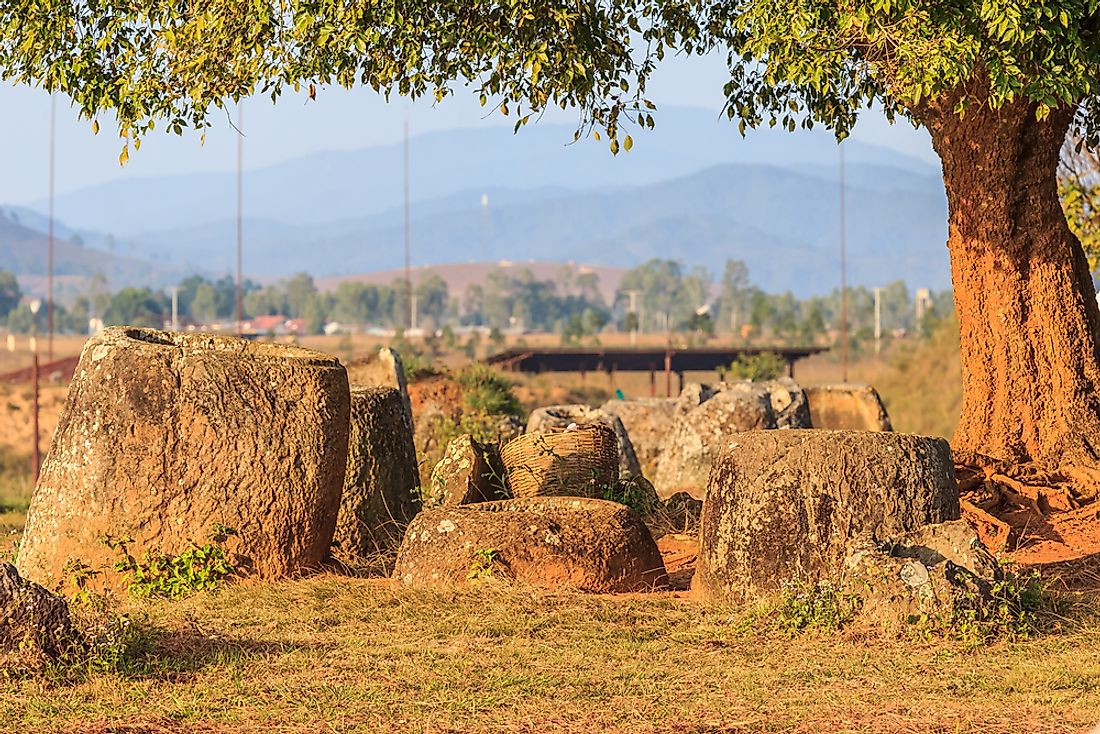
Between the years of 1964 to 1973, the U.S. Air Force bombed the Plain of Jars heavily in an effort against the communist forces of Pathet Lao and North Vietnam. A staggering amount of these bombs never exploded, and remain an active deadly threat in the area. As such, sightseeing can only be done on paths which have been clearly indicated. A program titled "Safeguarding the Plain of Jars" is a joint effort between Laos and the United Nations, with the intention to make the Plain of Jars safe enough to be a UNESCO Heritage Site.
~News courtesy of World Atlas~
2017年1月17日星期二
7 Things Not to Miss in Vientiane, Laos
7 Things Not to Miss in Vientiane, Laos

Situated on the banks of the Mekong river, Vientiane the capital of Laos is often overlooked by visitors in favor of more popular destinations such as Luang Prabang for outdoor activities, Luang Namtha for trekking or Vang Vieng to go tubing. Many people dismiss it as being boring and simply use Vientiane as a gateway to Laos when crossing the Friendship bridge from Nong Khai in Thailand. But actually Vientiane is a fascinating and unique melting pot of traditional Laos culture mixed with remnants of its time spent under French colonial rule.
Roads modeled on Parisian Rues and Boulevards are lined with street sellers peddling filled baguettes, as monks pass by dressed in brightly colored orange robes on their way to temple. European looking buildings house restaurants offering traditional Laotian dishes and games of petanque played by men old enough to recall French rule take place in the shadow of tropical palm trees. Here are 7 things not to miss in Vientiane:
1. Climbing up Patuxai
Positioned at the end of Lang Xang Avenue which is reminiscent of the Champs Elysees Paris, stands Patuxai Victory Monument. It’s an impressive looking archway that was built to commemorate those soldiers killed during World War II and during the war of independence from France in 1949.

Although often referred to as Vientiane’s Arc de Triomph, the detail of its architecture is traditional Laos with many Buddhist figures and symbols on display. For a small fee, you can climb the spiral staircase up to the top of the monument for panoramic views of the formal gardens below and out across much of Vientiane.
2. Visiting Pha That Luang

From the top of Patuxai looking North East you can make out the bright, shining form of Pha That Luang in the distance. Covered in gold leaf and shaped like a pyramid, it’s widely regarded as the most important religious monument in Laos and is breathtaking in its beauty. Also referred to as the Great Golden Stupa, it has been rebuilt various times in its history having been plundered for its gold and destroyed by wars on many separate occasions.
3. Down by the River at Night
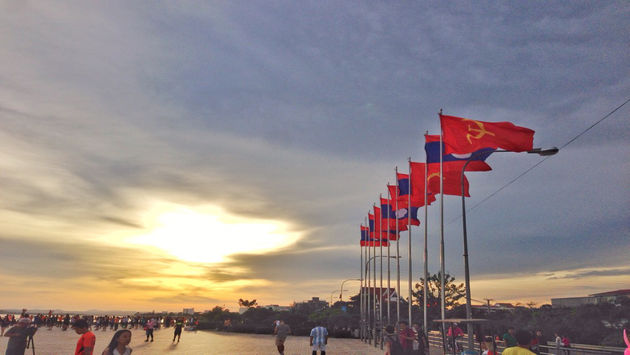
Just before dark, the area by the Mekong River turns into a bustling hub of activity. There are mass outdoor aerobics classes that take place at 6PM which you can join for under a dollar. Games of foot-volleyball take place in the sandy banks down below, and a vast night market springs up where you’ll find cheap clothes and souvenirs as well as food and drinks stalls. Many locals head down this way just to drink a beer and watch the sunset over the river which in itself is a truly unmissable experience when in Vientiane.
4. Witness Laos National Museum
Housed in an imposing colonial building, the interior of the Laos National Museum is slightly less impressive as it has definitely seen better days. That said, it’s a really interesting visit and certainly a unique blueprint for a national museum. Starting with prehistoric history and the relatively recent discovery of dinosaur bones in Laos, separate rooms run through the early history of the country before moving on to the various wars that have blighted its development in recent times. There are exhibitions of pottery, firearms and musical instruments and with Laos being one of the few countries in the world to remain under communist rule, it’s all narrated from a particularly partisan viewpoint which adds to the interest.
5. The Cope Visitor Center
Laos was severely affected by the Vietnam War and it’s estimated that there are up to 80 million un-exploded bombs that still remain strewn across the Laotian countryside today. As a result, around 50 people are injured or maimed by these bombs every year.

Cope is an incredible organization that provides help to those affected by these bombs, as well as by diseases such as Polio and Leprosy, by making prosthetic limbs and providing rehabilitation services. They have a brilliant visitor center in Vientiane which showcases their work and provides an insight in to the problems faced by thousands of people throughout the country. 6. Meditating with Monks
Wat Sok Pa Luang is a large temple located slightly outside of the center of Vientiane which offers the opportunity to try meditation with the young monks based here. It takes place every Saturday at 3 p.m. and is usually attended by about 10 monks and up to 20 visitors.

Many young monks use this as an opportunity to brush up on their English-speaking skills, and prior to the meditation is an hour of conversation with the monks where you’re able to learn more about their religion and culture. The meditation also lasts an hour and you’re instructed in sitting meditation and walking meditation techniques before an open Q&A where you can ask any remaining questions you may have.
7. Traditional Herbal Sauna and Massage
Just next door to Wat Sok Pa Luang is a traditional herbal sauna and massage center. It used to be located within the temple grounds but has now moved to the small woods that surround the Wat and offers a wood fired sauna as well as traditional massage available by the hour.
It’s a bit of a local secret with many Vientiane residents attending on a weekly basis so it can get quite crowded at peak times but it’s a friendly atmosphere and there’s an outdoor common space where you can chat and drink tea with new friends. If you’re able to set aside some time to spend in Vientiane, then it’s well worth staying for longer than the day that most visitors choose to spend. Elements of its culture are not found anywhere else in Laos, so before heading off to more rural areas in the Center and the North, make sure you explore the unique charms of the capital.
~Info courtesy of Travel Pulse~
Situated on the banks of the Mekong river, Vientiane the capital of Laos is often overlooked by visitors in favor of more popular destinations such as Luang Prabang for outdoor activities, Luang Namtha for trekking or Vang Vieng to go tubing. Many people dismiss it as being boring and simply use Vientiane as a gateway to Laos when crossing the Friendship bridge from Nong Khai in Thailand. But actually Vientiane is a fascinating and unique melting pot of traditional Laos culture mixed with remnants of its time spent under French colonial rule.
Roads modeled on Parisian Rues and Boulevards are lined with street sellers peddling filled baguettes, as monks pass by dressed in brightly colored orange robes on their way to temple. European looking buildings house restaurants offering traditional Laotian dishes and games of petanque played by men old enough to recall French rule take place in the shadow of tropical palm trees. Here are 7 things not to miss in Vientiane:
1. Climbing up Patuxai
Positioned at the end of Lang Xang Avenue which is reminiscent of the Champs Elysees Paris, stands Patuxai Victory Monument. It’s an impressive looking archway that was built to commemorate those soldiers killed during World War II and during the war of independence from France in 1949.
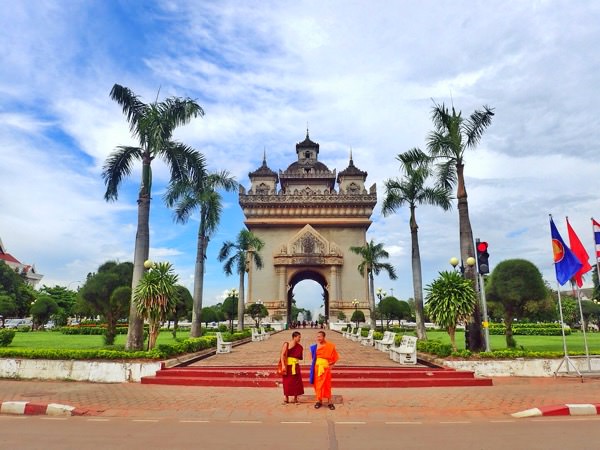
Although often referred to as Vientiane’s Arc de Triomph, the detail of its architecture is traditional Laos with many Buddhist figures and symbols on display. For a small fee, you can climb the spiral staircase up to the top of the monument for panoramic views of the formal gardens below and out across much of Vientiane.
2. Visiting Pha That Luang

From the top of Patuxai looking North East you can make out the bright, shining form of Pha That Luang in the distance. Covered in gold leaf and shaped like a pyramid, it’s widely regarded as the most important religious monument in Laos and is breathtaking in its beauty. Also referred to as the Great Golden Stupa, it has been rebuilt various times in its history having been plundered for its gold and destroyed by wars on many separate occasions.
3. Down by the River at Night
Just before dark, the area by the Mekong River turns into a bustling hub of activity. There are mass outdoor aerobics classes that take place at 6PM which you can join for under a dollar. Games of foot-volleyball take place in the sandy banks down below, and a vast night market springs up where you’ll find cheap clothes and souvenirs as well as food and drinks stalls. Many locals head down this way just to drink a beer and watch the sunset over the river which in itself is a truly unmissable experience when in Vientiane.
4. Witness Laos National Museum
Housed in an imposing colonial building, the interior of the Laos National Museum is slightly less impressive as it has definitely seen better days. That said, it’s a really interesting visit and certainly a unique blueprint for a national museum. Starting with prehistoric history and the relatively recent discovery of dinosaur bones in Laos, separate rooms run through the early history of the country before moving on to the various wars that have blighted its development in recent times. There are exhibitions of pottery, firearms and musical instruments and with Laos being one of the few countries in the world to remain under communist rule, it’s all narrated from a particularly partisan viewpoint which adds to the interest.
5. The Cope Visitor Center
Laos was severely affected by the Vietnam War and it’s estimated that there are up to 80 million un-exploded bombs that still remain strewn across the Laotian countryside today. As a result, around 50 people are injured or maimed by these bombs every year.
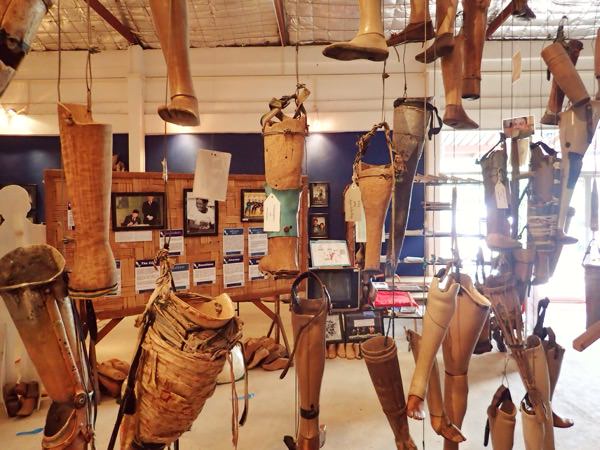
Cope is an incredible organization that provides help to those affected by these bombs, as well as by diseases such as Polio and Leprosy, by making prosthetic limbs and providing rehabilitation services. They have a brilliant visitor center in Vientiane which showcases their work and provides an insight in to the problems faced by thousands of people throughout the country. 6. Meditating with Monks
Wat Sok Pa Luang is a large temple located slightly outside of the center of Vientiane which offers the opportunity to try meditation with the young monks based here. It takes place every Saturday at 3 p.m. and is usually attended by about 10 monks and up to 20 visitors.

Many young monks use this as an opportunity to brush up on their English-speaking skills, and prior to the meditation is an hour of conversation with the monks where you’re able to learn more about their religion and culture. The meditation also lasts an hour and you’re instructed in sitting meditation and walking meditation techniques before an open Q&A where you can ask any remaining questions you may have.
7. Traditional Herbal Sauna and Massage
Just next door to Wat Sok Pa Luang is a traditional herbal sauna and massage center. It used to be located within the temple grounds but has now moved to the small woods that surround the Wat and offers a wood fired sauna as well as traditional massage available by the hour.
It’s a bit of a local secret with many Vientiane residents attending on a weekly basis so it can get quite crowded at peak times but it’s a friendly atmosphere and there’s an outdoor common space where you can chat and drink tea with new friends. If you’re able to set aside some time to spend in Vientiane, then it’s well worth staying for longer than the day that most visitors choose to spend. Elements of its culture are not found anywhere else in Laos, so before heading off to more rural areas in the Center and the North, make sure you explore the unique charms of the capital.
~Info courtesy of Travel Pulse~
2016年8月29日星期一
A slow boat to China
A slow boat to China

Asian cruise operator Pandaw is all set to launch the RV Laos Pandaw, a 10-cabin cruiser, on the Mekong River.
Asian cruise operator Pandaw is all set to launch the RV Laos Pandaw, a 10-cabin cruiser, on the Mekong River.
Offering cruises on the upper and lower Mekong, the first trip through Laos, Thailand and Myanmar is sold out but bookings for its maiden excursion on the upper Mekong into China are now open.
The expedition cover seven nights, beginning in Chiang Saen in Thailand's North.
The journey continues and stops over along the border of Myanmar and Laos on its way to Jinhong in Yunnan Province.
The Old Mandalay Road in Shan State, the Xiang Kok Akha Village in Laos and a tea plantation and botanical gardens are also on the itinerary. Visit www.Pandaw.com.
~News courtesy of The Nation~

Asian cruise operator Pandaw is all set to launch the RV Laos Pandaw, a 10-cabin cruiser, on the Mekong River.
Asian cruise operator Pandaw is all set to launch the RV Laos Pandaw, a 10-cabin cruiser, on the Mekong River.
Offering cruises on the upper and lower Mekong, the first trip through Laos, Thailand and Myanmar is sold out but bookings for its maiden excursion on the upper Mekong into China are now open.
The expedition cover seven nights, beginning in Chiang Saen in Thailand's North.
The journey continues and stops over along the border of Myanmar and Laos on its way to Jinhong in Yunnan Province.
The Old Mandalay Road in Shan State, the Xiang Kok Akha Village in Laos and a tea plantation and botanical gardens are also on the itinerary. Visit www.Pandaw.com.
~News courtesy of The Nation~
订阅:
博文 (Atom)