2017年9月19日星期二

Top 5 things to do in Luang Prabang, Laos

Top 5 things to do in Luang Prabang, Laos

In between Vietnam and Thailand, Laos is lesser-known and lesser-discovered, but no less interesting than its pair of famous neighbours. 

As a long thin country that also touches China to the north and Cambodia to the south, the landscape varies wildly; from thickly-forested areas to more tropical surrounds with plunging waterfalls and thousands of islands.


No trip to this country would be complete without a couple of days in former royal capital, Luang Prabang, so beautifully preserved that it became a UNESCO World Heritage Site in 1995.

Make sure you’re camera-ready as you take it all in; there’s a photo opportunity around every magical corner. Gilded temples with sloping roofs gleam in the sunshine, faded French colonial villas line the streets, and the rolling mountains and the Mekong and Nam Khan rivers lay just beyond the town. 

Everything ticks over at a leisurely pace, substituting the frenetic energy of nearby countries for a laid-back calm.

Most visitors only spare two or three days here, so it’s important to have a plan. There are more than a few ways to make the best of it.

1. Take an architecture tour

With a combination of traditional Buddhist temples (bathed in gold leaf), traditional stilted houses, and French colonial architecture around every corner, a trip to Luang Prabang is an architecture tour in itself. 

But team up with an expert to get the stories behind these fascinating streets, and track the evolution of the town; from its ancient conception, through the colonial and royal eras, and right up to the present day.


2. Take a cycling tour

Why not see the sights atop two wheels? A bike gives you the freedom (and time) to see the best of the town, venture into the countryside and feel the wind in your hair – often a welcome treat in the humid months.


Wheel from place to place; the Wat Visoun, National Museum (previously the Royal Palace), the Wat Mai Temple and Wat Xieng Thong are all worth a visit. 

Then leave the town behind to see the landscape just outside. Hop down to potter around the Phosy Market and see great pails with mountains of rice, a rainbow of fresh fruit and vegetables on offer, and bottles of fresh fruit juice to fuel your onward journey. 

Visit non-profit organisations, chat to local villagers and peer over the waters of the Mekong. Certainly more than you could manage on foot.

3. Celebrate Songkran

To see an especially authentic side to Luang Prabang, visit in April during Songkran (Pi Mai Lao), Lao New Year. Celebrations take place across the country, with a lot of water-based events. 

It’s a special time when the community, along with swathes of orange-robed monks, come together. The most important Buddha statues are carried through the streets, and Buddha images, temples and houses are washed down. 

As are people! Find yourself doused in an enthusiastic water fight, or even the recipient of a bucket of water over your head – a good-humoured way of saying Happy New Year.

4. Take a cookery class

Lao cuisine is an unknown entity to many outsiders. It’s actually quite similar to some dishes in northeastern Thailand, and incorporates lots of fresh produce. 

Any cookery class in Luang Prabang is likely to begin with a trip to the market to personally pick out your ingredients, and learn about a few of the area’s more unusual herbs, fruits and vegetables. 

Work with skilled local chefs, discover the authentic methods that go into this delicious cuisine, and take your new found cookery skills home with you.


5. Walk to the top of Mount Phousi at sunrise or sunset

For panoramic views of the town and the lush areas in the distance, pay an nominal fee and take a gentle climb up the steps to Mount Phousi. 

Spot the meandering Nam Kham and Mekong rivers, as well as the undulating horizon. You can rest your feet at one of the interesting temples or outside a Buddha statue along the way, but at only 100km high, it’s not a strenuous ascent. Plan your trip at sunrise or sunset when the views are at their most beautiful.


~Courtesy of a luxury travel blog~

2017年9月5日星期二

Lao minister witnesses 'Chinese speed' in construction of China-Laos railway

Lao minister witnesses 'Chinese speed' in construction of China-Laos railway

Lao Minister of Public Works and Transport Bounchanh Sinthavong has witnessed "Chinese speed" at the construction of the China-Laos railway during a recent inspection visit.

The project management department of China Railway No 5 Group Co Ltd told Xinhua on Saturday that it has been the second visit by Bounchanh to the site of the construction.

During his visit last Wednesday, the minister learned about the construction situation of railway tunnels as well as the compensation for land acquisition and difficulties faced during the construction process.

Minister Bounchanh expressed his satisfaction over the quality, progress and safety of the project.

Talking with project manager Zhou Xiaoxia, the minister said: "At my first visit here, the section I construction site of China Railway No 5 Group Co Ltd, a cave was just being digged for tunnel construction. 

But only five months after that, as many as 5,000 meters of the tunnel have been completed. I have witnessed the real 'Chinese speed,' while site management is also really good. You are so great!"

The minister said that the Lao government attaches great importance to the construction of the railway and will create favorable conditions for the construction so as to boost interconnectivity between the two countries.

The China-Laos railway has a total length of 414.332 kilometers with over 62.7 percent being bridges and tunnels, linking Mohan-Boten border gate in northern Laos and capital Vientiane.

Operating speed on the route is designed at 160 km per hour.

The construction of the project is scheduled for five years with an investment of some 40 billion Chinese yuan ($5.8 billion), 70 percent of which comes from Chinese investment and the rest from the Lao side.

The China-Laos railway is the first overseas route connecting with the railway system in China, using Chinese technology, equipment and investment.

~News courtesy of China Daily~

2017年9月4日星期一

Better facilities needed for Visit Laos Year 2018

Better facilities needed for Visit Laos Year 2018

AUTHORITIES are preparing to promote “Visit Laos Year 2018” with the aim of making this sector a key pillar for economic growth.

A comprehensive plan of activities and events, including the improvement of tourism sites and facilities, has been drawn up.

The official ceremony to kick off the Visit Laos Year is expected to be held in November, on the same day that the That Luang Festival is celebrated. Other activities will be conducted until the end of next year.

Visit Laos Year will provide a good opportunity for the improvement and development of infrastructure, hospitality and services, which are key to making a good impression on tourists.

Connectivity, such as direct flights and road links, is a very significant factor to drive the growth of tourism in Laos.

Last year, the number of tourist arrivals touched 4.2 million, but this was 10% lower than the figure for 2015. The Asean countries accounted for the largest number of tourists in 2016, with more than three million people or 73% of the total tourist arrivals, but the figure decreased compared to previous years.

The number of international tourists from other countries increased by 6% from 643,000 people in 2015 to 681,000 people last year.

The tourism industry has grown steadily over the past 42 years since Laos was liberated in 1975. Tourism in the country is mainly of three types, based on history, natural beauty and culture.

However, if we are to really promote tourism, we must provide better facilities to tourists.

It is observed that a lot of tourist sites – even in Laos capital Vientiane – especially historic and cultural sites, still lack information for visitors. Tourists do not understand the importance of the place they are visiting. They just know it is famous, go around the site and take some photos.

Even at That Luang Stupa and Patuxay Gate – unique sites in the capital city – information for tourists is very limited.

At least at That Luang Stupa there is a small wooden sign with a little information about the structure but it will be better if there are leaflets available there.

The authorities need to solve the issue fast: one way is to use the funds generated by the tourism industry to produce leaflets or videos that can be of benefit to visitors.

For a start, we should use the money collected from entrance fees at key tourist sites to support this project as the number of tourists visiting these places is on the rise, particularly That Luang Stupa and Wat Sisaket. — Vientiane Times/Asia News Network

2017年7月21日星期五

Northern road cut by landslides

Northern road cut by landslides

The road from Kasy district in Vientiane province to Nan district in Luang Prabang province is currently cut by numerous landslides following recent heavy rainfall, authorities have reported.

Authorities said the road was cut on Tuesday night at about 7:45pm after heavy rain lashed the province since Friday last week.

Many motorists and tourists on the route needed a ride back to find somewhere to stay in Kasy district town guesthouses.

Officials urged the public to use caution when travelling in the area as poor road conditions may contribute to accidents.

Vientiane provincial authorities assigned officials to survey the collapsed road before preparing to repair the section.

Workers were scheduled to start their repairs this week but have found it difficult because of the weather, authorities reported.

At the moment, it is not easy for workers on the road because it is still raining. If there is no more rain the road may be reopened in the near future.

Road users and tourists can use an alternative route, Road No. 13 North via Phoukhoun to the northern provinces, authorities advised.

As of yesterday, the road from Kham to Phonsavanh district in Xieng Khuang province was also cut by flooding after heavy downpours, provincial authorities reported.

In Xieng Khuang the flash flooding inundated Road No. 7 in Paek district. Residents have been resorting to heavy vehicles to cross the flooded route.

Most of the swamped farmlands and households are in Yuanthong village of Paek district.

Heavy rainfall over several hours yesterday caused flood waters to inundate private and state property and cut off key roads in the province.

Some roads linking the northern districts are now difficult to travel on but passable while other routes have been completely cut off by landslides, authorities reported.

Motorists travelling to the northern provinces have been advised not to use the Kasy to Nan road and go via other routes, officials warned.

~News courtesy of Vientiane Times~

Vientiane, Laos – World’s Most Relaxed Capital

Vientiane, Laos – World’s Most Relaxed Capital

Backpackers head south to get drunk and float down the river that skirts the village of Vang Vieng. More sophisticated travellers zero in on Laos’ luxurious capital, Vientiane, usually before a visit to Luang Prabang.

Unusually for a capital, Vientiane lies just over a border – the one with Thailand, just across the Friendship Bridge. The influence that shines through most brightly, however, is French.

For a start, the name is gallicised. The original name, Viangchan, which means ‘City of the Moon’ in the native Lao language, proved too tricky for the French tongue.

Expect French food, French flowers (marigolds), even the Arc de Triomphe – well, a monstrous concrete mockup, known as the Victory Arch. Dubbed the Vertical Runway because it was built with cement donated by the United States in 1969 for airport construction, the arch is a touch taller than the original, to spite the French, but unfinished.

A sign blames this on Laos’ tumultuous history, presumably meaning the punishment inflicted by the French, Japanese, Chinese, Burmese, Vietnamese, Thais and Americans. But all that was a while back. Even the sign itself recognizes the monument’s deficiencies, calling it a ‘monster of concrete’. No spin here. Cynics may wonder why the landlocked Communist state still cannot get its act together and finish the job. The decrepitude which the arch epitomises also extends to the streets, so be careful not to step in a pothole or sewer.

Be careful too of the tuk-tuk drivers, who are as enterprising as any you will meet in Asia. Always fix a price and clarify your destination before you jump in. Otherwise, expect to be taken to the wrong side of town for rather more Kip – the not-quite-worthless currency – than you care to cough up.

The perfect remedy for a white-knuckle tuk-tuk ride is a session at one of Vientiane’s many excellent and ridiculously cheap spas. For a flurry of Kip you can experience a massage far less brutal than the kind meted out by Thai pampering pugilists – and in much more atmospheric surroundings.

Blessed with bags of Indochinese style and with the cheeriest of residents, Vientiane blends Gallic flair with Asian mystique. This style also influences and permeates the sauces and aromas of the exquisite cuisine available in the world-class French restaurants at Fountain Square. For those travellers who are heartily sick of the sweet and sickly white wheat products falsely posturing as ‘bread’ across almost all of SE Asia, the lunch baguettes and breakfast croissants available throughout most of Laos will make a most welcome change.

The culinary alternative to Fountain Square is the Mekong. Its near bank is lined with scores of cheaper but still good Asian restaurants where diners lounge on mats and watch the sun set over the river while sipping a cold Beer Lao, the default and delicious state brew.

If you can tear yourself away from Vientiane’s culinary attractions, then maybe visit the Lao National History Museum. Set on the high street, it sounds and looks boring, but is brought to life by its jargon of jingoistic rage against the invader. Check out the photos of sniper peasants and the displays of chunky guns. ‘Weapons ordered by the US imperialists for its puppets,’ one caption screams.

If your spine can handle the bone-jarring 24 km ride, then take a trip from Vientiane to maybe the area’s most memorable attraction: that memory card-consuming icon, Buddha Park sculpture garden. There, tilted at crazy angles, mammoth concrete statues of Buddhist and Hindu gods jostle with fantastical likenesses of real and imaginary beasts. The highlight must be the three-storey giant pumpkin-like representation of Hell, Earth and Heaven, which is entered through the jaws of a demon head. More kitsch than religious, but a fun day out.

Apparently designed by Salvador Dali while drugged beyond his eyeballs, Buddha Park dates back to 1958 and owes its existence to the mystic seer Luang Pu Bunleua Sulilat, who left Laos after the 1975 communist takeover. The park cuts a contrast with the golden and gorgeous downtown temples that stick to the rulebook more but, like Buddha Park, also have a slightly hallucinatory feel about them.

Whilst these attractions are worth a visit, Vientiane lacks the truly monumental and instead captures the senses by its tranquility and idiosyncratic charm. It’s a place to eat, people-watch, relax, get a massage, maybe visit one of the respectable night-clubs. Vientiane lacks vibrancy but, for so many visitors with enough energy expenditure in their everyday lives, this is just what the doctor ordered.

“Vientiane is exceptional, if inconvenient”, wrote Paul Theroux in 1975, “the brothels are cleaner than the hotels, marijuana is cheaper than pipe tobacco, and opium is easier to find than a cold glass of beer”. A lot has changed since 1975: Vientiane is no longer, after a thorough purge by the communist regime, in any way a seedy or a druggy place. Whether this could have been achieved without sending so many people on decade-long sojourns in re-education camps is not something we can give an opinion on, as we would like to one day get visas to visit the country again.

Source by: simon ramsden

2017年3月23日星期四

Plain Of Jars: Unique Places Around The World

Plain Of Jars: Unique Places Around The World

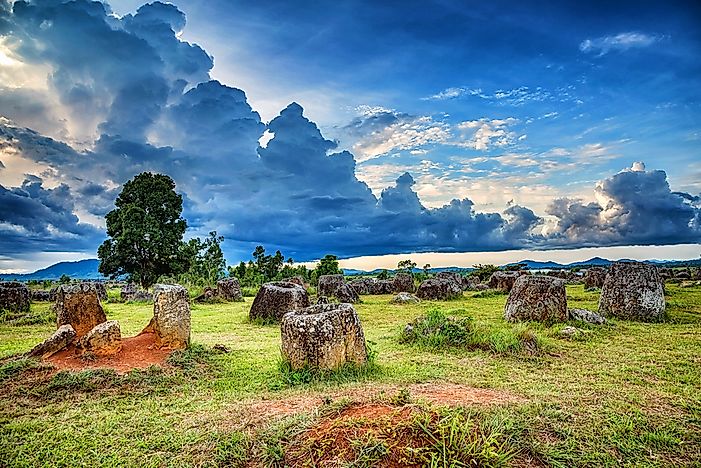
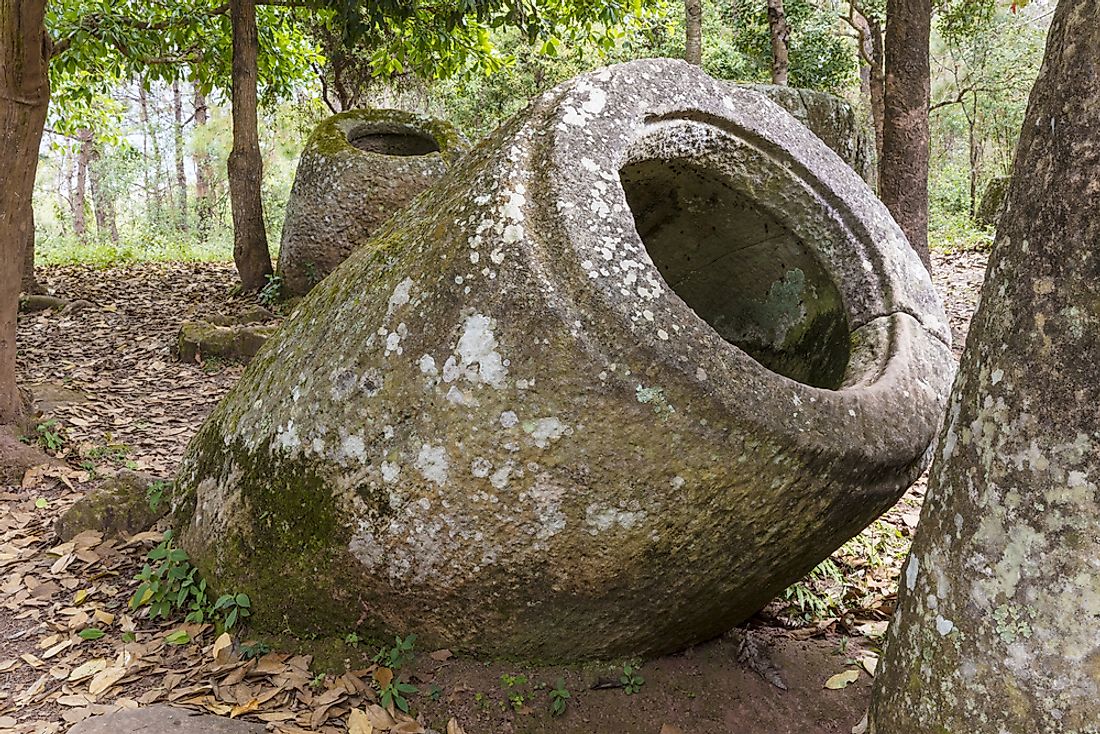
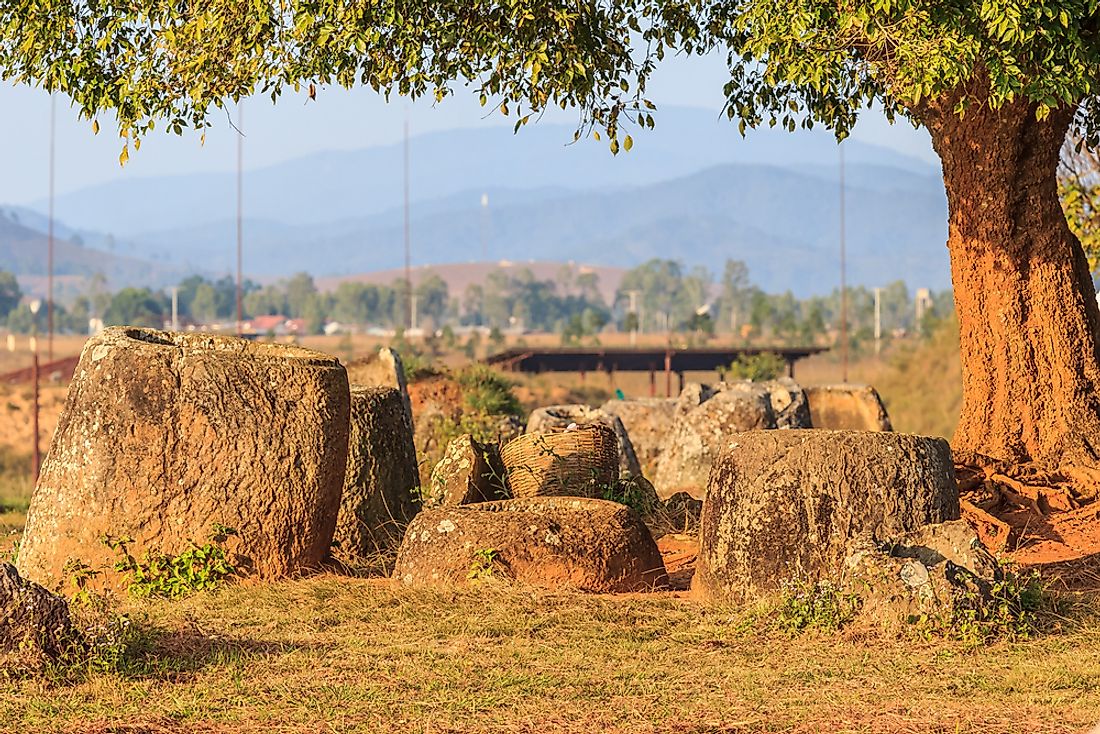
Plain of Jars is a large archaeological landscape found in Laos.


The Plain of Jars site.

The Plain of Jars is perhaps one of the most prolific sites in Laos. From overall aesthetics to the essential details, the plain symbolizes an oasis of ancient artifacts amid threats of a diminishing history around the region. Apart from being an established sanctuary, the Plain of Jars contributes majorly towards the economy. Although this nature reserve stands out as a major positive contributor towards the livelihood, it most certainly faces significant threats which may require future consideration.

5. Description


The Plain of Jars is located far in the northern regions of Annamese Cordillera, which is one of the largest mountain range in Southeast Asia. The archaeological landscape consists of various stones shaped in the form of jars. These beautiful jars are carefully arranged in a cluster-like manner. The distribution of the jars spans both the valley as well as the foothills in the mid-plain of Laos. It was not until 1930 that Madeleine Colani, a famous French researcher established that the jars came as a result of ancient burial practices. Excavation projects since then have confirmed this.

4. Tourism

Like many prehistoric sites, the Plain of Jars attracts many tourists from around the globe every year. This translates to a significant economic value regarding foreign exchange and other aspects such as international relationships. The breathtaking landscape acts as a distinct region where tourists come to quench their thirst for new experiences. The government has equally invested in the region by ensuring a safe and a convenient passage to the tourist site. There is a bus and air travel to the regions surrounding the plains. Although tourism in the region is still being fostered due to the bombings which occurred between 1964 to 1973, there are profound measures which have been put to restore the pride of the Plain of Jars.

3. Uniqueness

Even though there is substantial evidence to ascertain the origin of the jars in the region, the jars continue to carry an air of mystery. There is no clear fact that shows the maker of the jars and their reason. The bizarre collection of scattered jars in the plain is one of the unique sites one’s eyes meet upon visiting the plain. The presence of five different types of stones within the wall structure of the jars is also a startling occurrence that further serves to explore the uniqueness of the jars.

2. Habitat

The jars are mostly located in a plain which mostly has grass and scattered trees growing around them. Although the most attractive features about the plain are the jars, wildlife is also an occasional occurrence as small animals can be seen on the plains.

1. Threats


Between the years of 1964 to 1973, the U.S. Air Force bombed the Plain of Jars heavily in an effort against the communist forces of Pathet Lao and North Vietnam. A staggering amount of these bombs never exploded, and remain an active deadly threat in the area. As such, sightseeing can only be done on paths which have been clearly indicated. A program titled "Safeguarding the Plain of Jars" is a joint effort between Laos and the United Nations, with the intention to make the Plain of Jars safe enough to be a UNESCO Heritage Site.

~News courtesy of World Atlas~